Pitching Mechanics
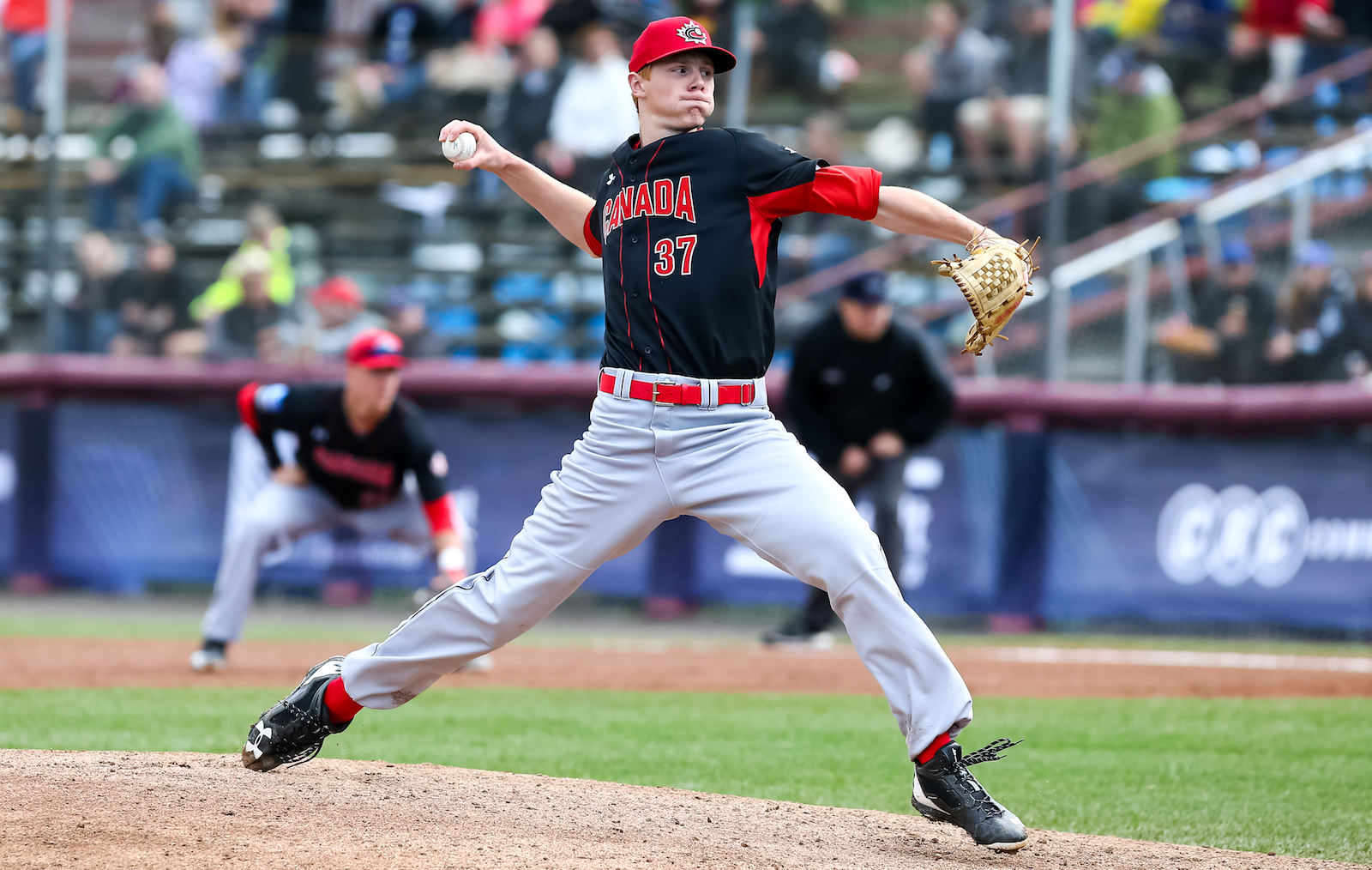
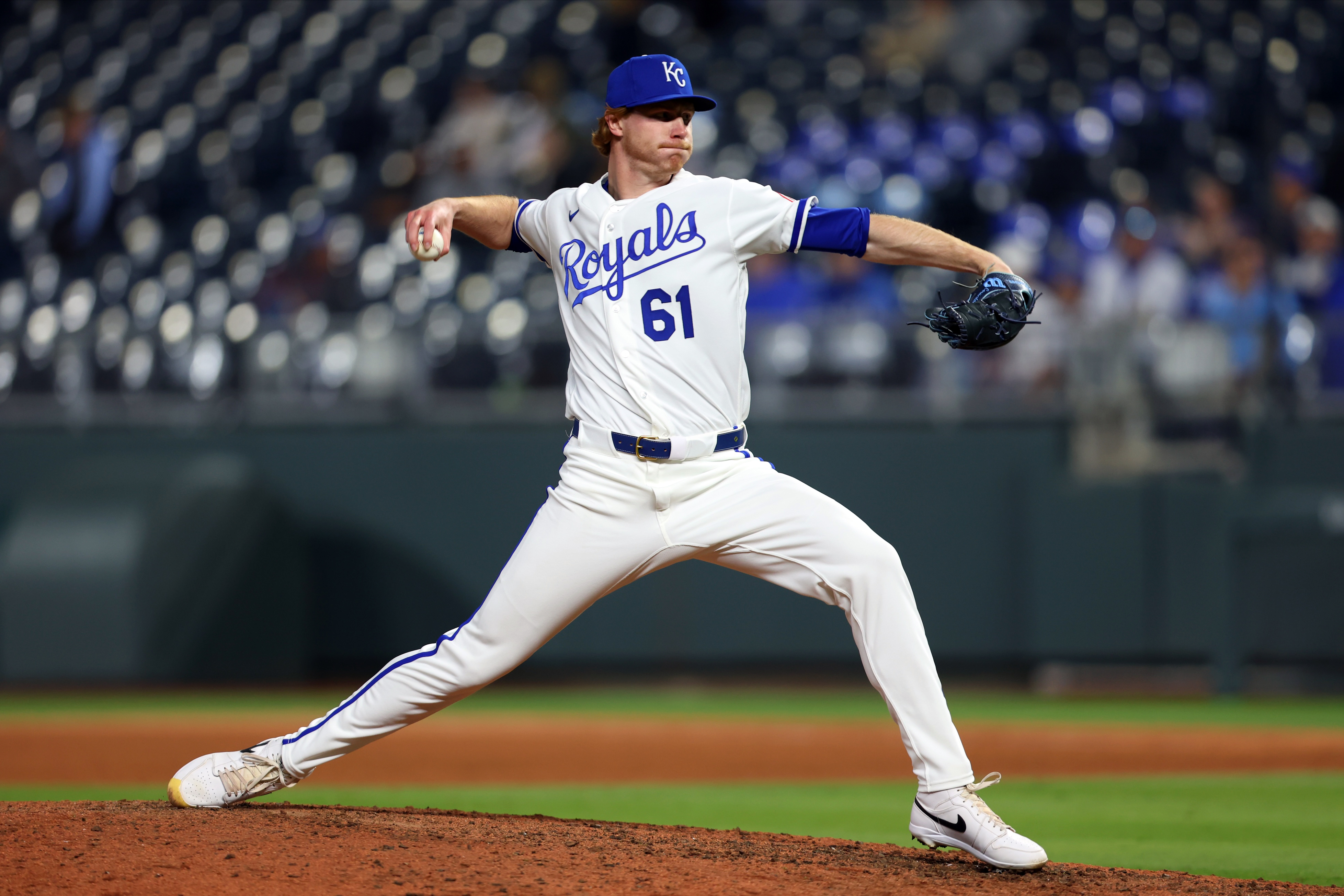
Young pitchers need to develop a balanced and consistent delivery in order to maximize their potential and reduce the likelihood of injury.
Grip
Most pitching grips use two fingers on top of the ball, with the thumb underneath. A young pitcher with a small hand may need to use three fingers across the ball. Have a relaxed but firm grip. Avoid choking the baseball.
Types of Grips
- Place your index and middle fingers across the horseshoe area of the ball.
- Place your index and middle fingers along the two seams.
- The side of your thumb pad goes underneath at the mid-point of the ball.
Key Points
Stance
Pivot Foot The foot on the same side of the body as the player's throwing arm.
Stride Foot The foot on the same side of the body as the glove hand.
Key Points
Wind-Up
The wind-up gives the pitcher rhythm and momentum necessary for an accurate and powerful pitch.
Key Points
**With runners on base, the pitcher should assume the set position. From this position, the pitcher can either deliver the ball to the plate or pivot and try to pick off a base runner.
Set Position
Gathered Position
Key Points
Stride
Key Points
Landing And Release
A T-Position for throwing is created through the proper positioning of the player's arms, hands and torso. The player's arms and hands form the top crossbar of the T, while the torso forms the base. This is the final position before the throwing hand rotates and starts on a forward path toward the release point.
Key Points
Follow-Through
Coaches need to watch young pitchers, to be sure they don't drag their pivot foot during the follow-through phase of the delivery.
Key Points
Warm-Up, Cool-Down Routines & Pitching Drills
Young pitchers, need to understand the importance of arm care. Progressive loosening of the arm must precede all hard throwing activity. The arm should be taken through a cool-down routine at the conclusion of the throwing activity. Coaches must make sure that eager young players never throw when the arm is sore.
Warm-Up
Cool-Down
Drop Step, Pivot And Gather
The goal of this drill is to create and maintain balance over the pitching rubber.
**As players develop balance, a second player can flip a ball to the pitcher as he/she arrives at the gathered position to ensure good balance and a slight pause.
Movement Towards Plate
The goal of this drill is to feel the proper timing of the hand break.
Balanced Landing
Long Toss
With this drill, the coach can emphasize:
**Distance must respect physical capabilities. It is very important that proper throwing mechanics are emphasized.
Two-Knee Partner Toss
This drill isolates upper body throwing mechanics. Coaches should emphasize:
**Throwing distance should be about 10 feet.
One-Knee Partner Toss
The coach should emphasize:
Lead Arm Mechanics
The goal of this drill is to create and maintain proper glove arm direction throughout the delivery.
Related Items
| Pitching Drills | Conditioning for Pitchers | Pitcher's Arm Protection and Pitch Count |
| Pitching Control | Types of Pitches |
Player of the Week
Tanner (NB )
Tanner is a Rally Cap veteran who comes to practice everyday with a smile on his face. He is working on his Blue and Red Hats this season.Tanner is excelling at fielding this year, his crocodile technique is flawless and he does the "Catch an Egg" drill extremely well. His favorite team is the Boston Red Sox and his favorite pre-game meal is KD. Keep up the good work Tanner!
Tanner est un vétéran du programme « Rallye Cap » qui s'amène jour après jour aux séances d'entraînement avec un grand sourire accroché au visage. Depuis le début de la saison, il est passé du groupe des « casquettes bleues » à celui des « casquettes rouges ». Cette année, Tanner brille à capter des balles, et ce, en plaçant parfaitement ses mains en « bouche de crocodile »! Il réussit également fort bien au jeu de l'attrapé de l'oeuf. Tanner est un partisan inconditionnel des Red Sox de Boston et son repas d'avant match préféré est bien évidemment le “Kraft dinner”! Continu ton bon travail Tanner!
Photo Gallery
2010 Baseball Canada National Teams Awards Banquet & Fundraiser
Survey
Have you been following the National Championships live courtesy of Pointstreak?
Long Term Athlete Development (LTAD)
What is LTAD?
Long Term Athlete Development (LTAD) is a systemic approach being developed and adopted by Baseball Canada
to maximize a participant's potential and involvement in our sport. The LTAD framework aims to define optimal training,
competition and recovery throughout an athlete's career to enable him / her to reach his / her full potential in
baseball and as an athlete.
Read More
RBI PROGRAM - Reaching Baseball Ideals
What is the RBI Program ?
Ensure that local baseball associations apply core common criteria to ensure that consistent good practice is in place - To empower parents when choosing a local baseball association for their children.
- To ensure that RBI Accredited Associations are recognized through a common approach to branding.
- To provide a focus around which all baseball associations in Canada can come together to support good practice in working with children and young people.
- To promote and reward registration/membership within Baseball Canada, baseball's national federation of sport, as well as within the Provincial Baseball Associations.